Navigating the Southern Alps from the Crown Range to the Nevis
In Central Otago, “Winter” isn’t just a season—it’s a mechanical challenge. From the black ice of the Kawarau Gorge to the wind-blown drifts of the Lindis Pass, your tyres are the only thing standing between you and the landscape.

Narrow tyres were the de rigueur of the day on this 1928 Chrysler Model 62, parked outside this historic Central Otago hotel in the Cardrona. In the early days, “Winter Driving” meant absolute precision. Those thin tyres were designed to cut through the snow to find the “Grit” beneath.
Today, while our technology has evolved, the physics remain the same: Traction is about pressure and pattern. Whether you are driving a vintage icon or a modern SUV, if your rubber can’t find the road, the road will find you.
- Local Tip: Historic snowfall doesn’t care about your horsepower. It cares about your contact patch.

This is just below the summit of Duffers Saddle, the highest public road in Central Otago that accesses the remote Nevis Valley. Looking at the 70 Series LandCruiser (Troopie) against the backdrop of the hidden side of the Remarkables, you can see the story written in the snow.
Notice the tyre marks. On a remote road like this, your tread pattern isn’t just a specification—it’s your signature. A dedicated winter tyre or a high-spec All-Terrain (A/T) is designed to “bite” into the snow, using the friction of the tread blocks to create forward momentum.
- The Nevis Reality: When you’re this far back, “Good Enough” tyres aren’t enough. You need rubber that stays flexible when the mercury drops below zero.

The Crown Range Summit in mid-winter is a lesson in scale. When the snow walls close in and the road often reduces to a single lane, your margin for error disappears.
See that fallen road cone? It’s a reminder of how quickly “controlled” conditions can change. Driving the Crown Range requires more than just a 4WD badge; it requires Tyre Coherence.
- The 4mm Rule: While the legal limit is lower, we recommend at least 4mm of tread for safe Southern Alps winter transit.
- The Sipe Secret: Modern winter tyres feature “sipes”—tiny slits that open up to grab the ice. If your tyres are “bald” or hardened by age, they become skis.
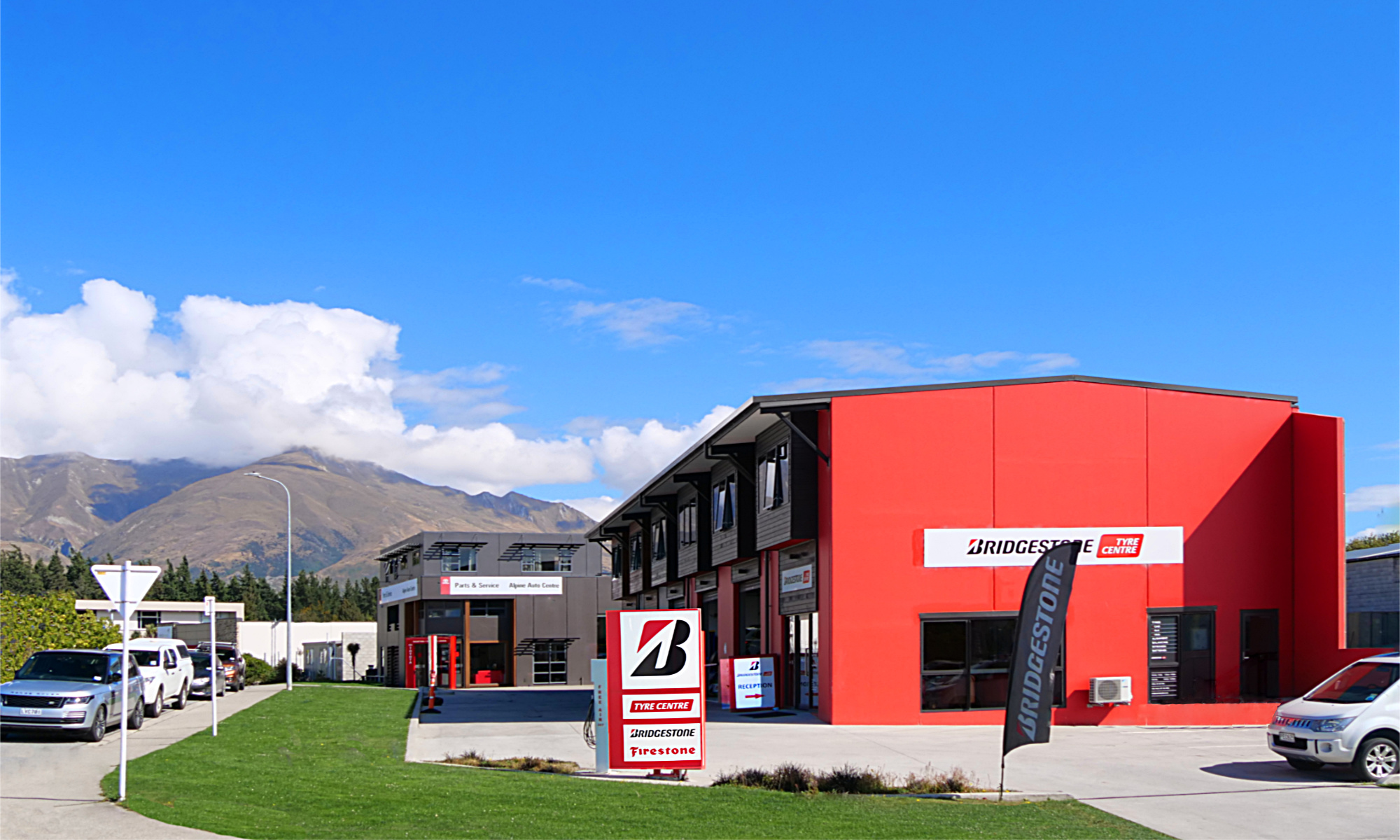
When to Switch? The Bridgestone Wānaka “Safe-T” Radar
Don’t wait for the first “Road Closed” sign on the Lindis. In Wānaka, the time to check your “Traction Alignment” is now.
- Safety Checks: Pop into the “Hangar” at Bridgestone Wānaka. We’ll check your tread depth and pressure to ensure you’re ready for the Nevis or the morning commute.
- Local Knowledge: We don’t just sell tyres; we live in these mountains. We know which patterns work for the school run and which ones you need for the ski field access roads.
- Call us: +64 3 443 1323
- Visit us: 32 Reece Cres. Wānaka 9305
- Hours: Monday – Friday, 7:30am – 5:30pm
- Closed Saturday & Sunday
Direct Email: mark@bridgestonewanaka.co.nz

You must be logged in to post a comment.